Artists
Marina BaiselAtelier MartisThibeau ScarcériauxSfossilsAlena MukhinaSofia KarnukaevaLumi UniNitush-ArooshIra BoykoMomoka GomiZlata KornilovaDROZHDINIAdriana MeuniéAlexandra VolskayaSee allArtists
Marina BaiselAtelier MartisThibeau ScarcériauxSfossilsAlena MukhinaSofia KarnukaevaLumi UniNitush-ArooshIra BoykoMomoka GomiZlata KornilovaDROZHDINIAdriana MeuniéAlexandra VolskayaSee allPrivacy overview
- Privacy overview
- Strictly necessary cookies
- 3rd party cookies
- Additional cookies
Privacy overview
Strictly necessary cookies
3rd party cookies
Additional cookies
Strictly Necessary Cookies
Strictly Necessary Cookie should be enabled at all times so that we can save your preferences for cookie settings.
Disable
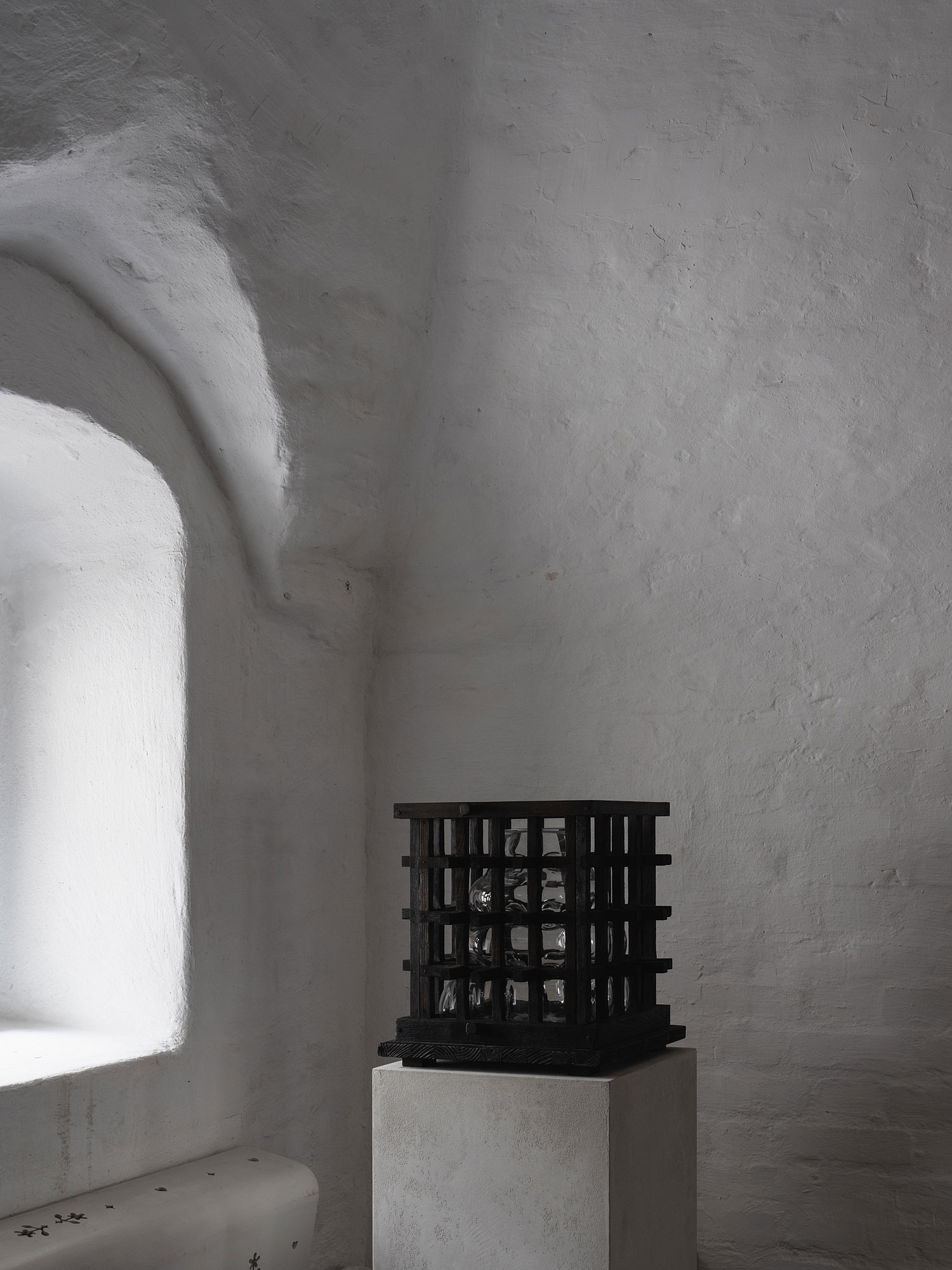
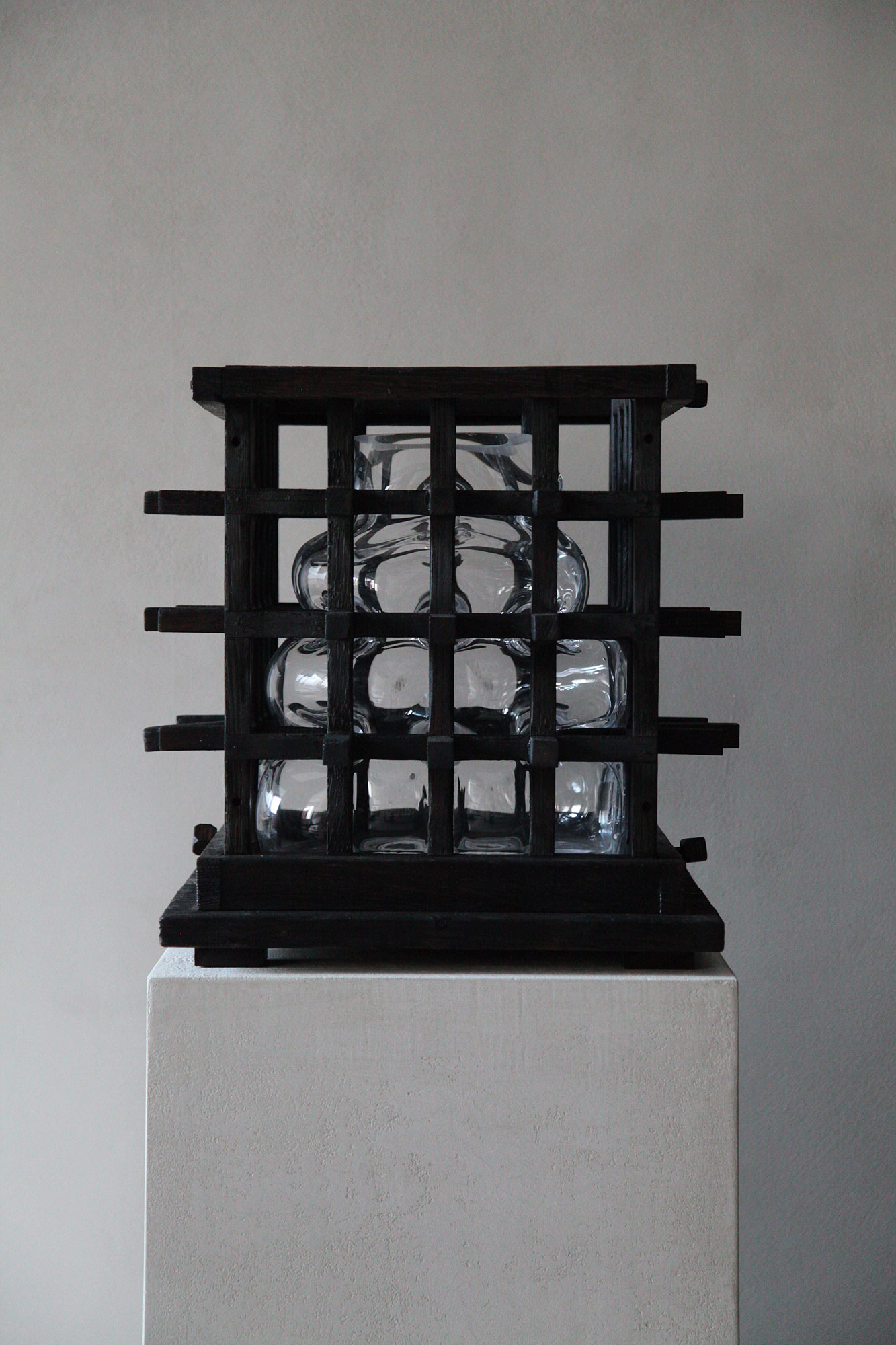
Kyoto, Sculpture
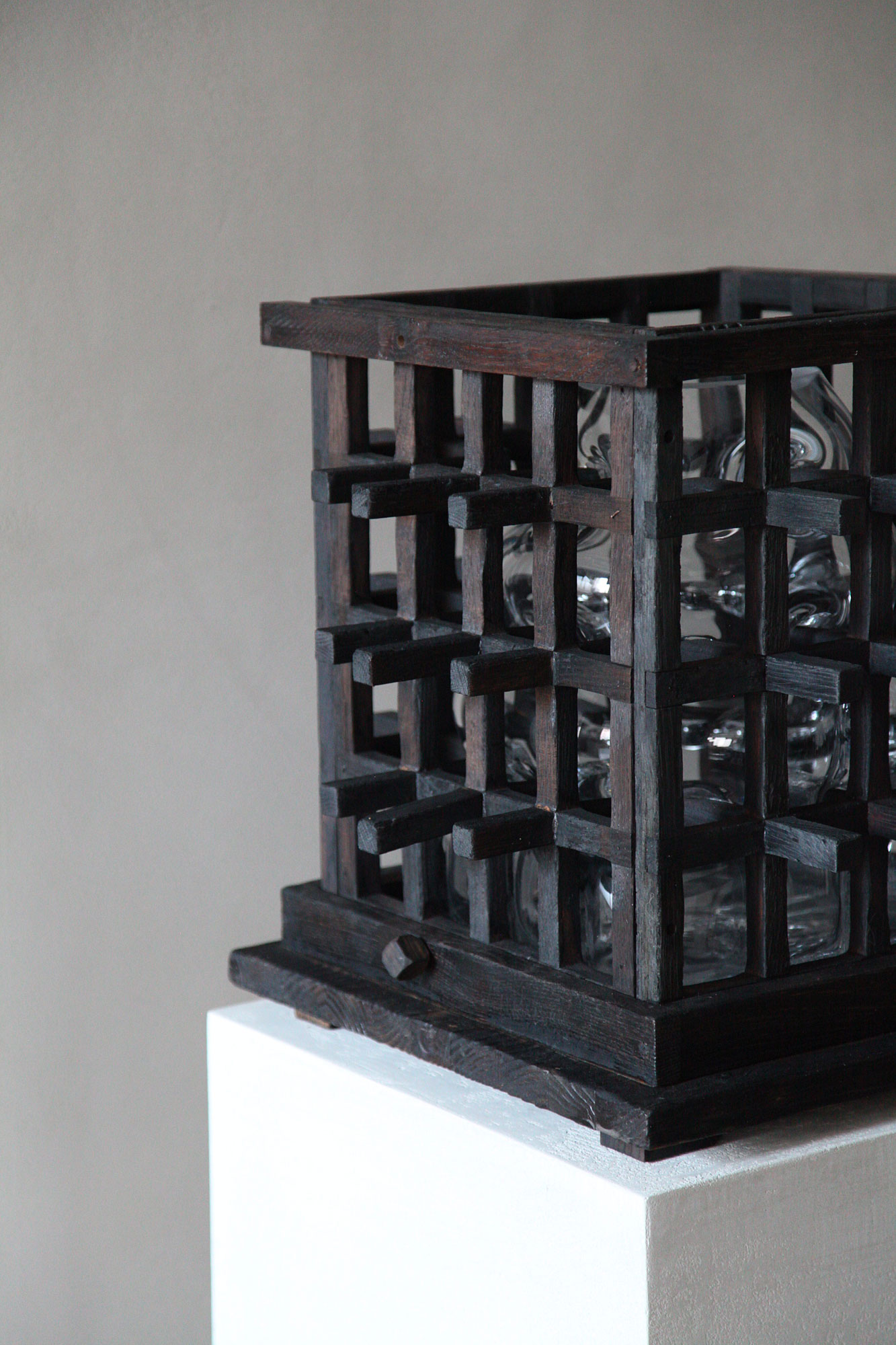
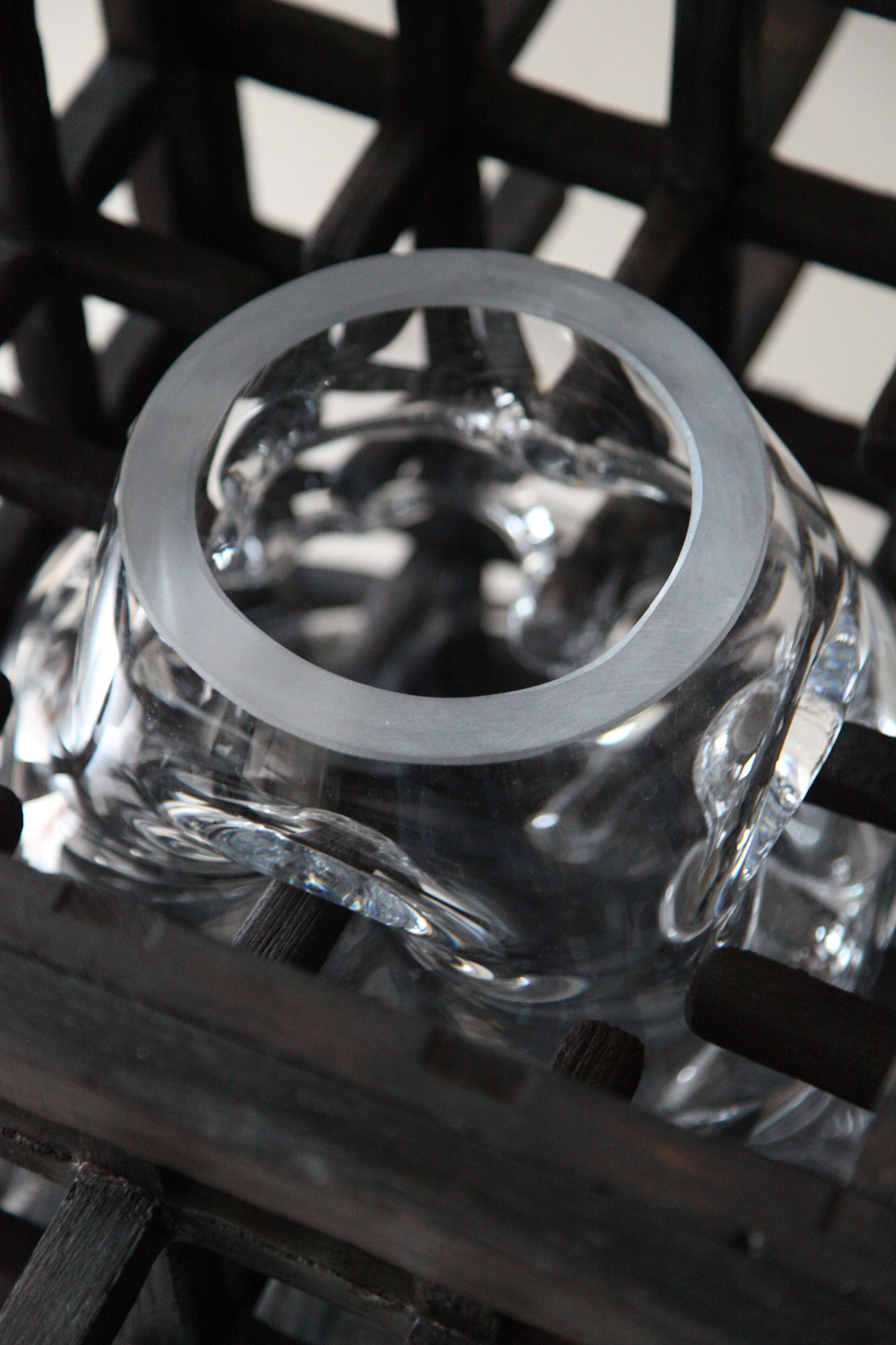
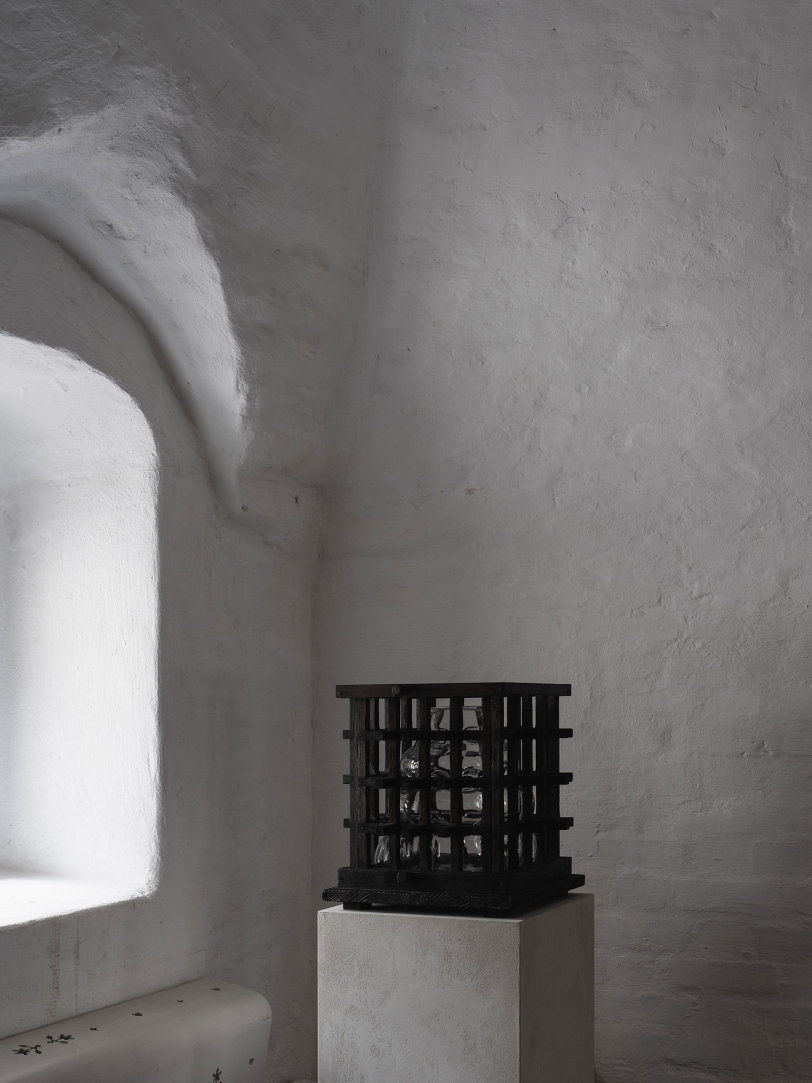
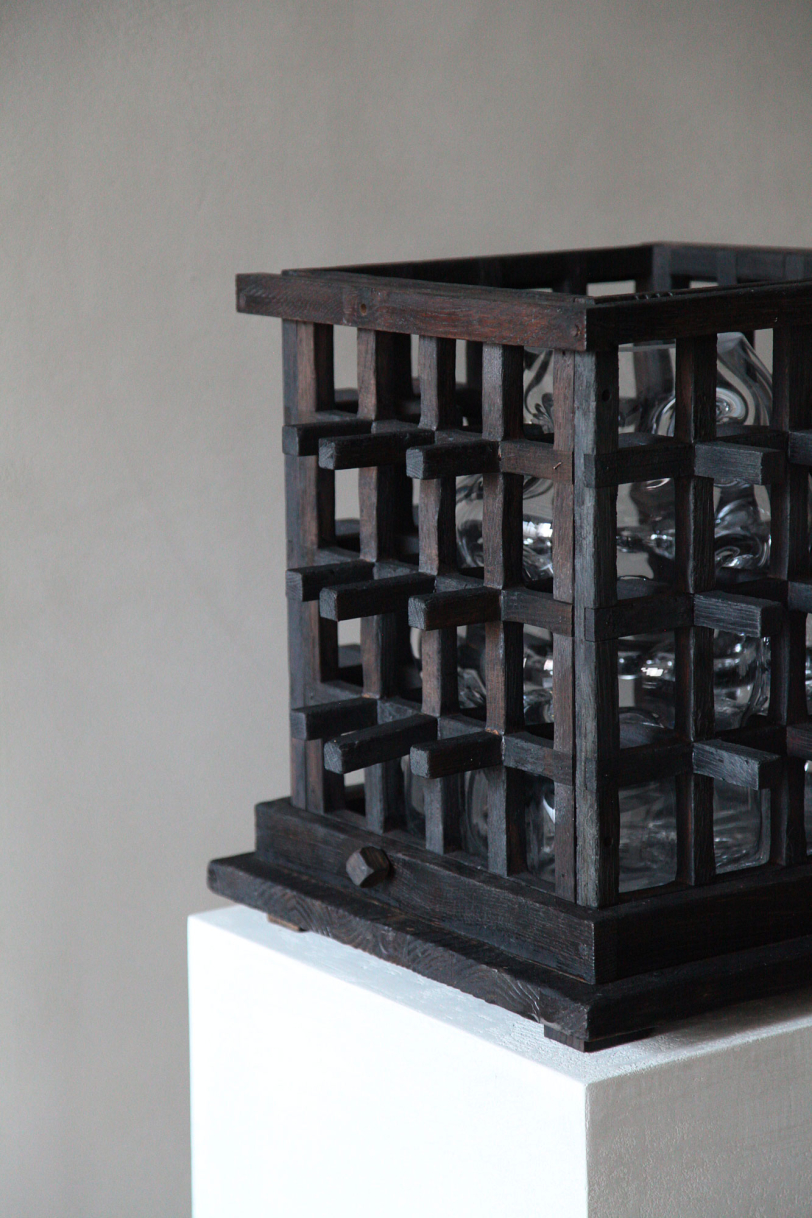
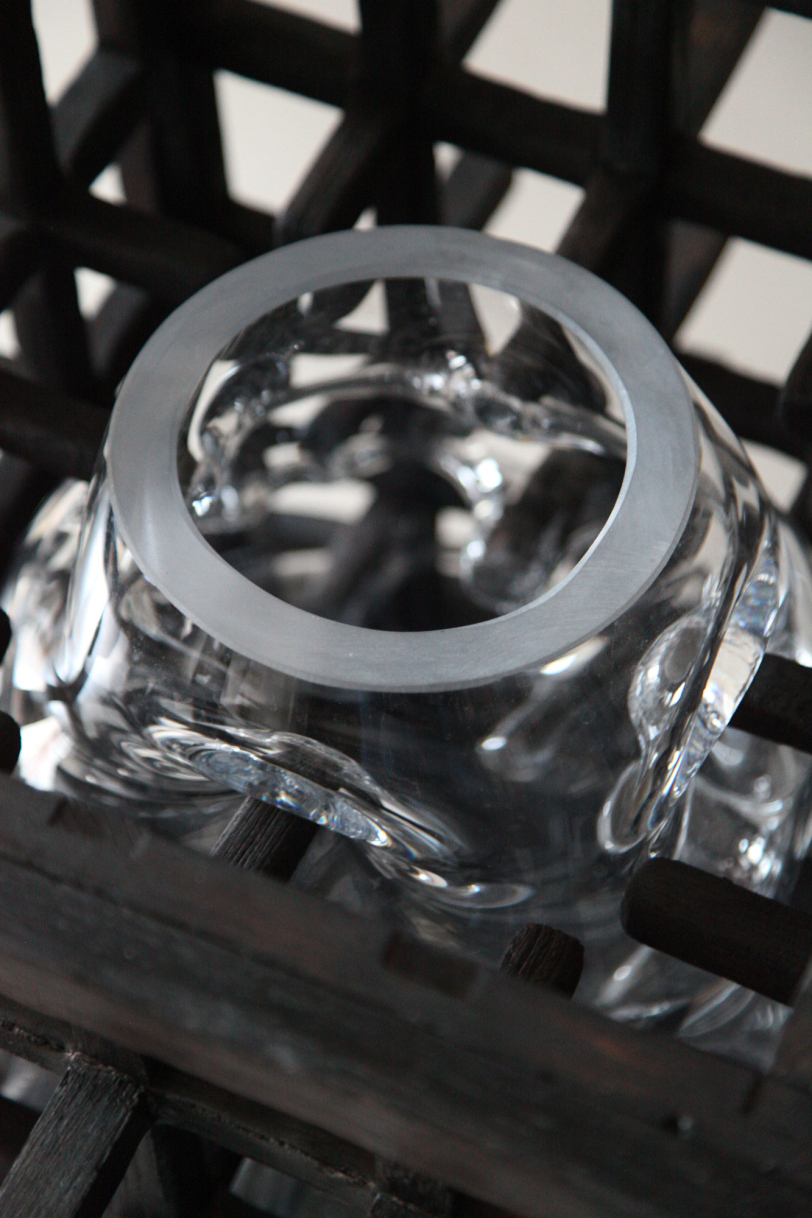
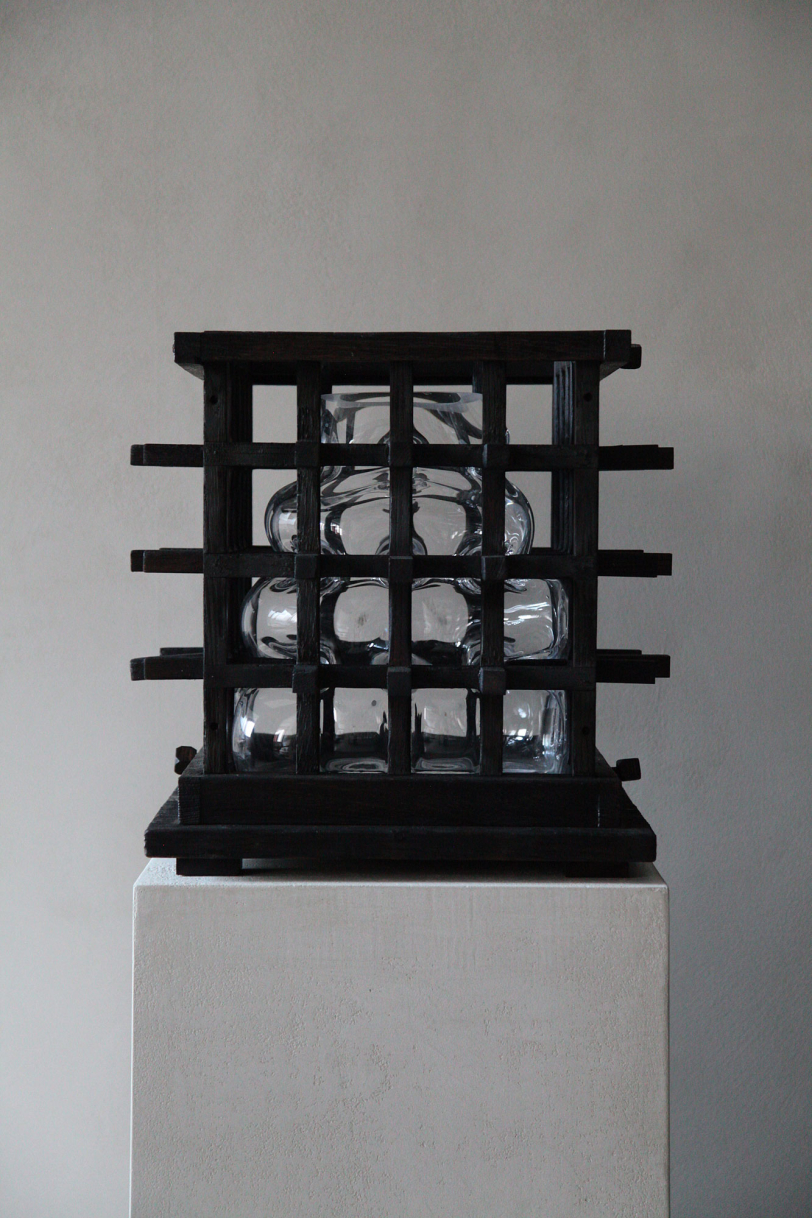
DROZHDINIThis work embodies an architectural approach to object design. At the core of Drozhdini’s philosophy is the fusion of multiple design languages into a unified whole. According to the artist’s concept, the wooden mold used in the creation of the piece remains an integral part of the artwork itself, defining its form while revealing the process behind its making.
The composition, constructed from black wooden beams, draws inspiration from traditional Japanese architecture. In Japanese culture, wood has long held a sacred significance, symbolizing life and a deep connection to nature. Despite the complexity of its construction and production techniques, the work presents itself as a restrained and minimalist composition.
Through this sculpture, the artist further develops the research explored in his dissertation on the functional use of highly textured glass. As such, the work extends beyond the boundaries of a purely artistic object and becomes an example of a research-based approach to art. It investigates both the aesthetic and functional qualities of glass, revealing how molten material is transformed into architectural form.
The sculpture belongs to a limited edition of five pieces. At present, only one has been realized. Rarity and limited production are fundamental to Drozhdini’s philosophy, emphasizing the value of the object and encouraging a renewed appreciation for even the simplest forms.
Details
Material
Crystal, Oak
Dimensions
50 × 50 × H 47 cm
Year
2023
Delivery
We deliver across the EU and UK. Shipping costs are calculated individually after your order and confirmed by our team. For other destinations, delivery may be arranged upon request.
We recommend insured shipping; NM Art & Design is not liable for transit damages without insurance.
More details in our Delivery Policy.
Have questions? Contact us
Kyoto, Sculpture
Have questions? Contact us
This work embodies an architectural approach to object design. At the core of Drozhdini’s philosophy is the fusion of multiple design languages into a unified whole. According to the artist’s concept, the wooden mold used in the creation of the piece remains an integral part of the artwork itself, defining its form while revealing the process behind its making.
The composition, constructed from black wooden beams, draws inspiration from traditional Japanese architecture. In Japanese culture, wood has long held a sacred significance, symbolizing life and a deep connection to nature. Despite the complexity of its construction and production techniques, the work presents itself as a restrained and minimalist composition.
Through this sculpture, the artist further develops the research explored in his dissertation on the functional use of highly textured glass. As such, the work extends beyond the boundaries of a purely artistic object and becomes an example of a research-based approach to art. It investigates both the aesthetic and functional qualities of glass, revealing how molten material is transformed into architectural form.
The sculpture belongs to a limited edition of five pieces. At present, only one has been realized. Rarity and limited production are fundamental to Drozhdini’s philosophy, emphasizing the value of the object and encouraging a renewed appreciation for even the simplest forms.
Details
Material
Crystal, Oak
Dimensions
50 × 50 × H 47 cm
Year
2023
From collection
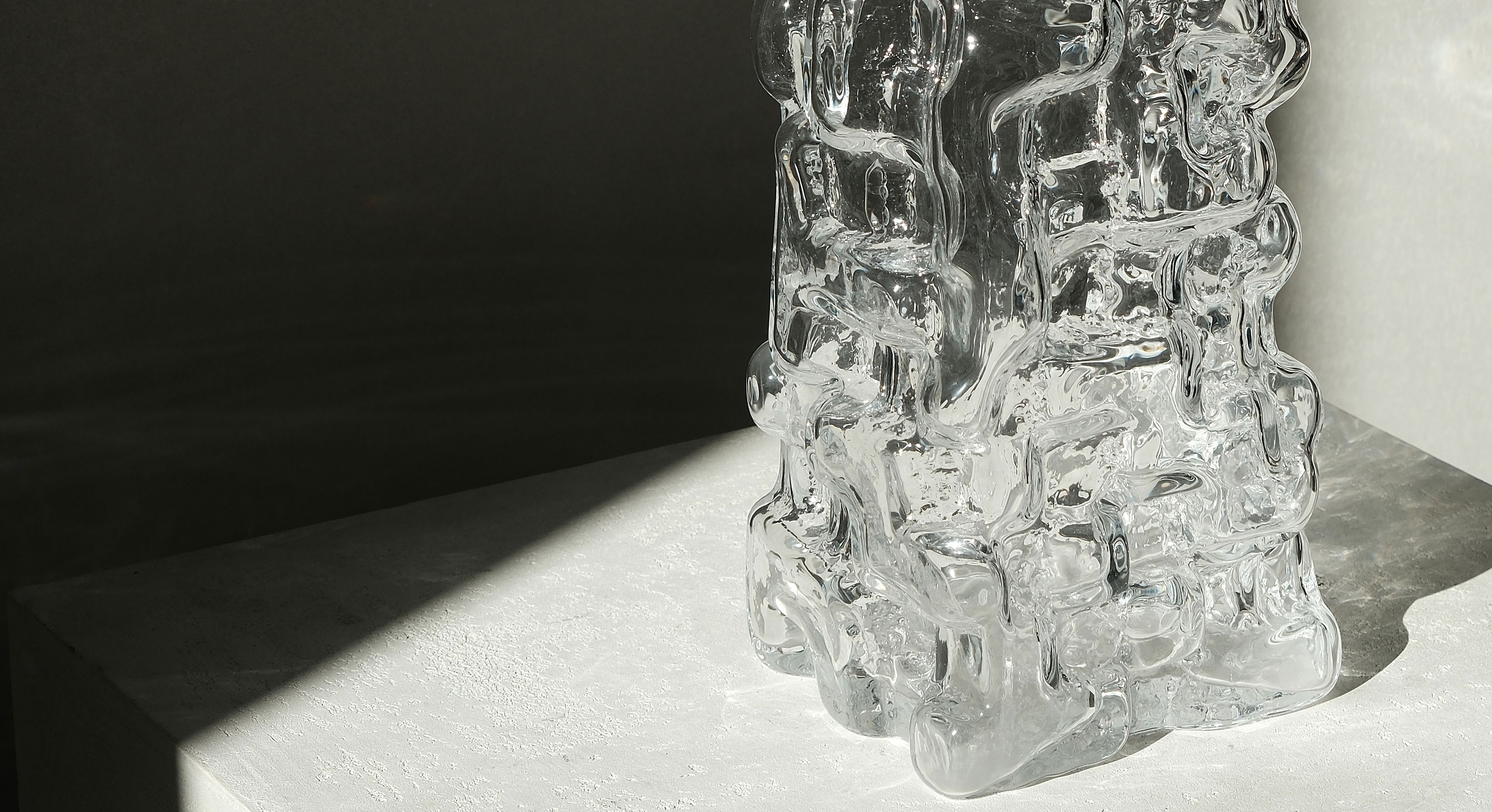
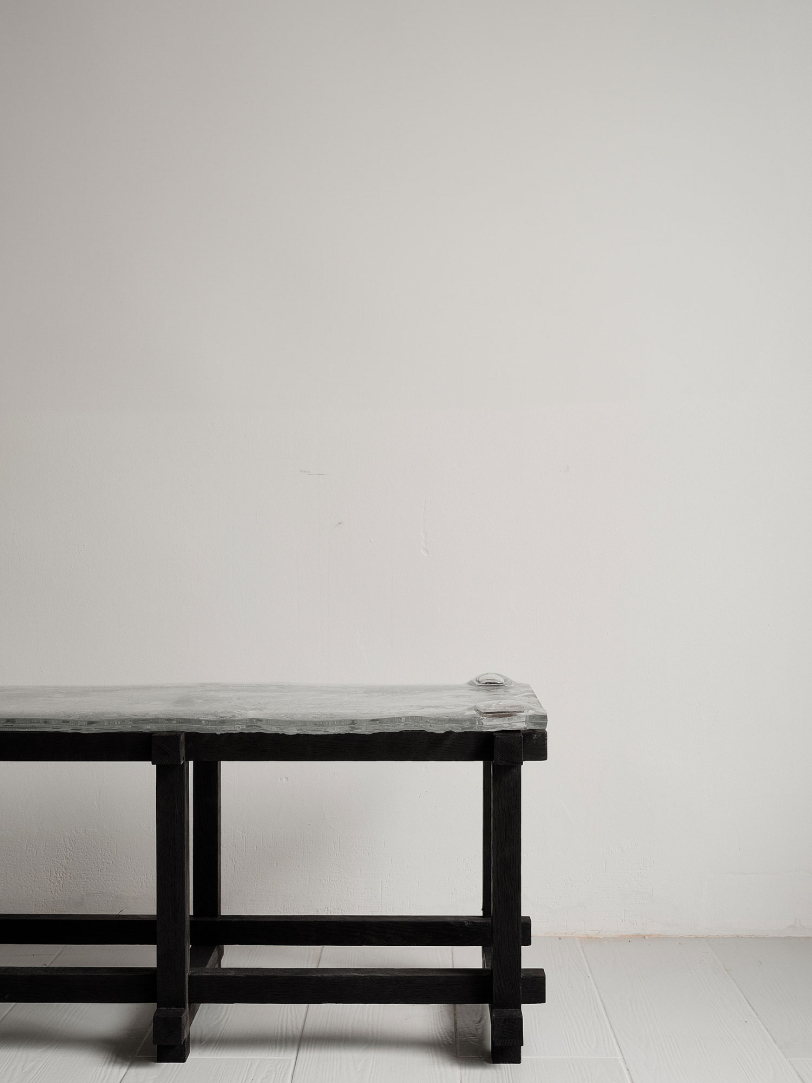
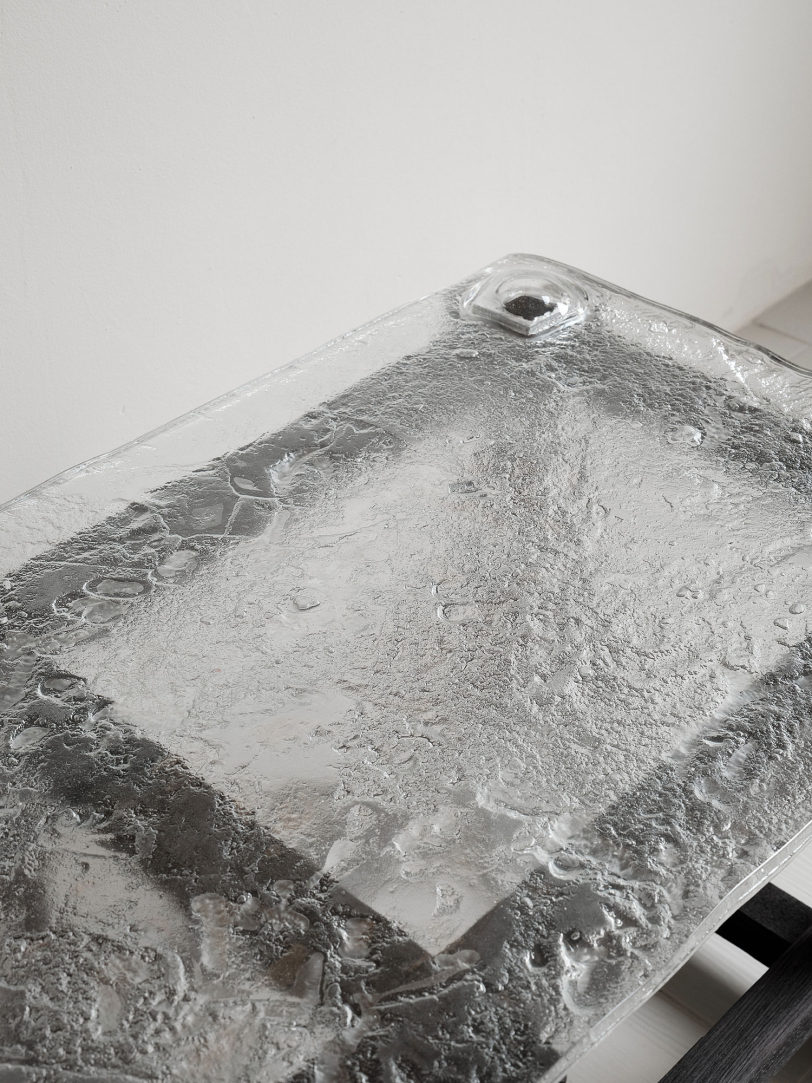
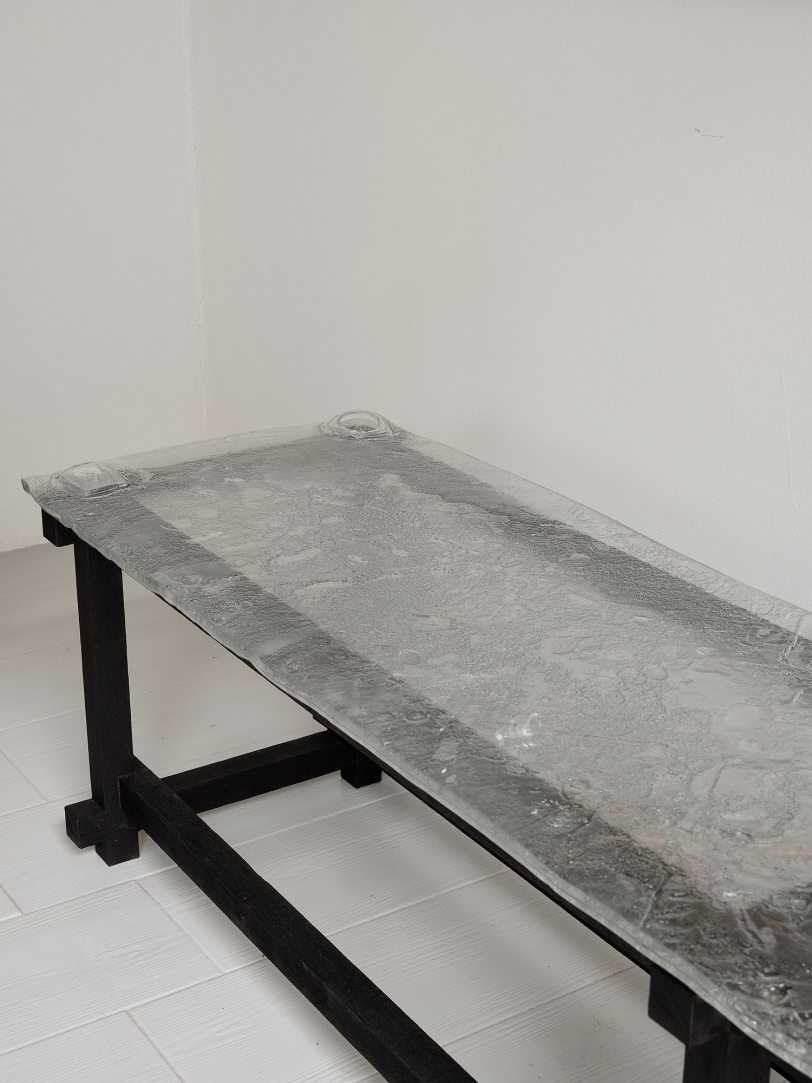
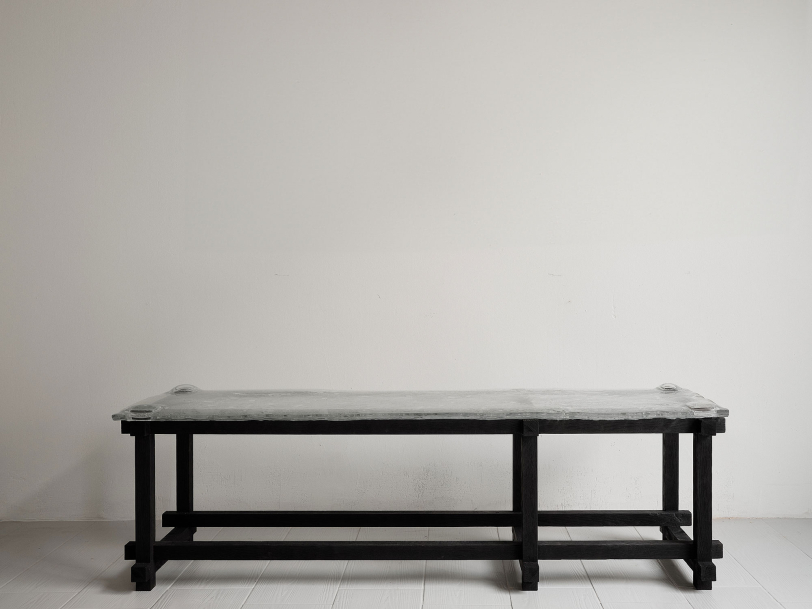
The Kyoto collection draws inspiration from traditional Japanese architecture, reinterpreting its structural elegance and spiritual depth. Composed of black wooden beams, each piece reflects the sacred role of wood in Japanese culture, where it has long symbolized life and continuity. Despite the complexity of construction and craftsmanship involved, the collection maintains a sense of restraint and clarity — a minimalist composition rooted in tradition yet open to contemporary interpretation.
About Artist
Download сatalogue
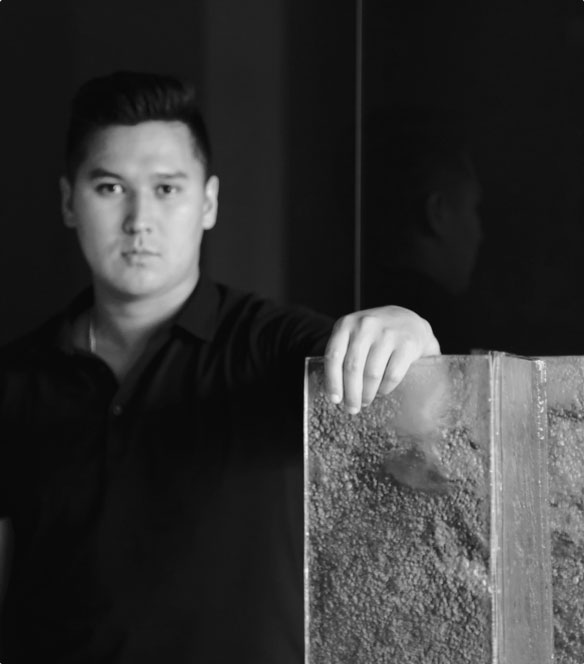
Drozhdini is a brand founded by Aleksey Drozhdin — an artist and designer who works with glass in his own unique technique. The designer has participated in an exhibition at the Beijing Museum of Contemporary Art and became a finalist in the International Art Glass Competition Milano Vetro-35, organized by The Museums of the Sforza Castle of Milan in collaboration with the collector Sandro Pezzoli. The winner’s works have become part of the museum’s collection.
Aleksey Drozhdin handcrafts artistic pieces from glass in combination with wood and metal. Recognizable features of his signature style include asymmetry, organic handcrafted forms, contrasting textures and materials, and meticulous glasswork. Through his work, the artist aims to preserve the traditions of glassmaking and infuse artisanal craftsmanship with his unique design.
The philosophy of Drozhdini is the fusion of multiple design languages into a unified whole. The wall object embodies the principles of constructivism, Scandinavian architecture, and the aesthetics of natural beauty. The idea is inspired by Japanese culture, where wood has been perceived as a special symbol of life with sacred significance from time immemorial. The highlight of this collection is the combination of glass texture with wood.
Drozhdini’s sculptural objects emerge from a deep engagement with material and emotion. Aleksey Drozhdin works intuitively, handcrafting each piece in his own technique that brings glass into dialogue with wood and metal. His forms are asymmetrical, tactile, and richly layered— shaped by contrasts between transparency and density, roughness and polish, precision and spontaneity.
Central to his approach is the desire to preserve the spirit of traditional glassmaking while reimagining it through a contemporary lens. Each work feels both raw and refined, echoing the emotional memory of place and time without replicating it. Through this balance of tension and harmony, Drozhdini creates objects that are not just seen, but felt— inviting quiet contemplation and lasting resonance.